


Wells Fargo Mobile®
Wells Fargo Mobile
If you are looking for a mobile way to keep an eye on Wells Fargo banking and investment accounts, Wells Fargo Mobile® is designed to put those details in one place. I approached it as a first-time user would: install it, sign in, find something useful quickly, and then decide whether it deserves a regular spot on my phone. That path is more important than a long feature list because a finance app only earns its place when it helps me complete ordinary money tasks without making me second-guess every screen.
This is a free finance app from Wells Fargo Mobile, intended for everyone, and it has been available since May 26, 2010. The current version is 26.02.00.38 and it requires Android 10 or later. On the store, it has an average rating of 4.8 from around 2.8 million ratings, with over 10 million installs. Those figures suggest that it is a well-established option, but popularity alone does not tell me whether it suits a person who wants a simple banking routine, someone managing investments, or a customer who prefers doing everything through a browser.
What to expect when you open it
The main purpose is straightforward: access your Wells Fargo bank and investment accounts from a mobile device. I would not approach it as a general-purpose budgeting app or as a replacement for every financial service. Its value is more focused. It gives Wells Fargo customers a convenient account doorway, so checking balances, reviewing activity, and handling everyday account needs can happen without waiting until I am at a computer.
That focus is useful for a first-time user because there is less need to build a financial system from scratch. I am not starting with blank categories, importing accounts from several institutions, or learning a separate budgeting method before seeing anything helpful. The first meaningful success is simply reaching the account view and understanding where my money is. For many people, that is enough to answer the immediate question: “Did that payment go through?”
The app also makes sense for someone who wants banking and investment access together. That does not mean the experiences are identical. Bank accounts and investments serve different purposes, and I would still take extra care when moving from routine balance checking to decisions involving investments. The convenience is having both areas available through the same Wells Fargo mobile experience, while the responsibility remains mine to check the account, transaction, and investment details carefully.
Related News

Why WhatsApp Messenger Still Makes Everyday Communication Feel Easy

Jurassic World: The Game Is the Better Dino Tycoon for Strategic Players

Threads in Real Life: Who Should Join, Lurk, or Leave

How SHEIN Turned Shopping Into an Endless Content Feed

How to Make Fortnite Feel Smarter on Mobile

Should You Switch to Microsoft Outlook on Mobile?
A useful expectation to set early is that a finance app is not automatically easier than every alternative. A mobile screen is convenient, but it can also compress information. If I am reviewing a complicated transaction history or trying to understand a larger investment decision, a desktop browser may be more comfortable. The phone app is strongest when I need timely access in a normal day, not when I want a wide spreadsheet-like view.
For security, I would treat the app with the same care as a wallet. I would install it only from the official Android or iOS store, keep the phone protected, and avoid signing in while using a device I do not control. I would also make sure I know whether I am checking a bank account or an investment account before acting. That small pause prevents a common mistake: assuming every balance on screen represents immediately spendable cash.
Starting without making the process harder
After installation, the sensible first step is to have my Wells Fargo sign-in details ready rather than trying to improvise them inside the app. A first launch is not the right moment to guess credentials repeatedly. If I am an existing customer, I would use the same account access I already use for Wells Fargo digital banking. If I am not a Wells Fargo customer, the app is unlikely to be useful simply because it is free; its purpose depends on having the relevant accounts.
Gallery
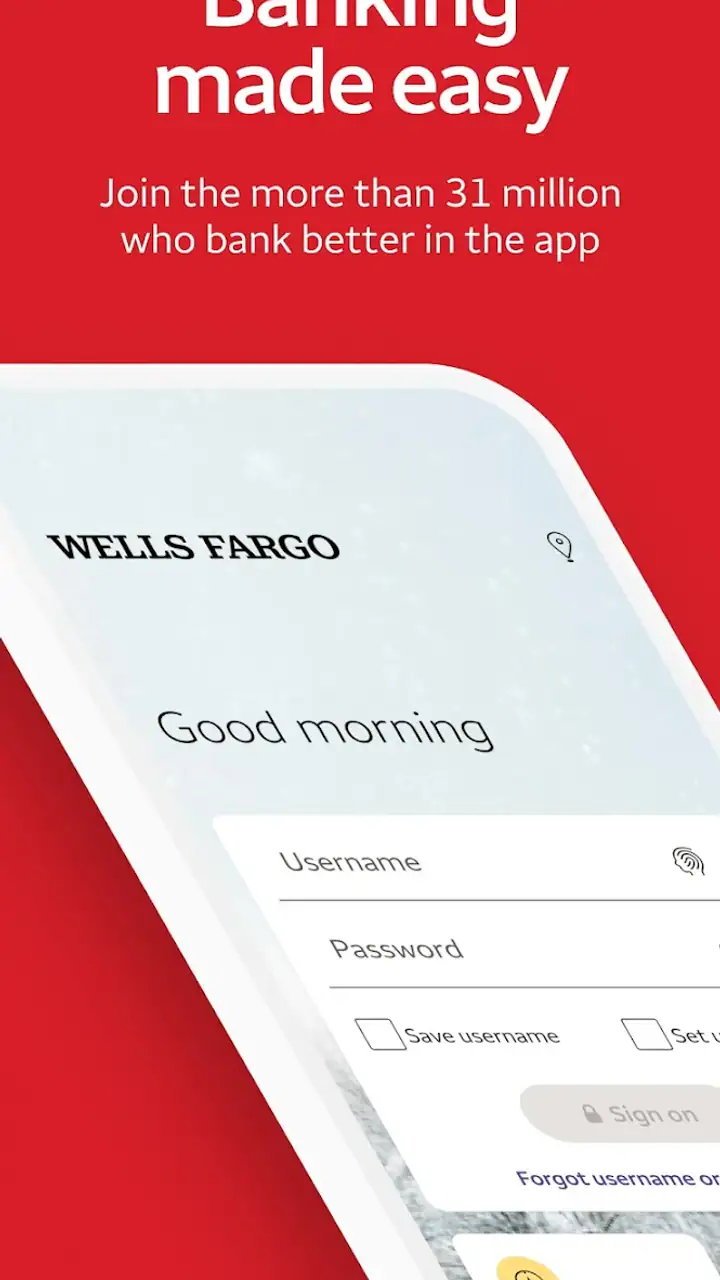
I would also begin with a stable connection and enough time to read each screen. Banking setup is one of those jobs where rushing creates more trouble than it saves. I would check that the app name and developer shown in the store match Wells Fargo Mobile, then open it and follow the sign-in flow. I would avoid saving access details in a way that someone else using my phone could easily see.
The first setup is best treated as an orientation exercise. I would look for the account overview, identify the difference between available money and other displayed balances, and open one recent activity item. That single action tells me more than tapping through every menu. It shows how the app presents account names, transaction descriptions, dates, and amounts, which are the details I will rely on later when checking a payment.
If the app presents several accounts, I would give myself a moment to recognize them rather than assuming the first one is the account I use most. This is especially important for people with both everyday banking and investments. A quick visual check before selecting an account is a practical habit: read the account label, confirm the balance context, and only then continue.
The age rating is Everyone, but that should not be confused with “no responsibility required.” A young person may be able to use an app with that rating, yet financial access still depends on the account and sign-in arrangements. I would not lend my unlocked phone to someone just because the app itself is rated for everyone.
The first successful action I would try
My recommended first win is reviewing a recent transaction rather than attempting something complicated. Once signed in, I would choose the account I use for daily spending, open the activity area, and locate a purchase I already recognize. This confirms that the account is connected to the mobile experience and teaches me where to return when I need to verify a payment.
That workflow is more useful than merely seeing a headline balance. A balance can tell me how much is displayed at a moment, but a recent transaction gives context. I can compare the merchant or description with a receipt, check whether the amount looks right, and notice whether an expected payment appears. If I am setting up the app before a busy week, this is the kind of small confirmation that makes later use feel less uncertain.
A realistic example would be checking a grocery purchase while standing outside the store. I would open the app, select the everyday account, and review the newest activity. If the transaction is present and the amount matches my receipt, I have completed a meaningful task in a few moments. If it is not there yet, I would avoid assuming the payment failed. Timing and account processing can affect what appears, so I would use the app as a way to inspect information, not as an invitation to repeat a payment impulsively.
Another practical workflow is checking an account before making a scheduled purchase. I would look at the relevant account, review recent activity, and consider upcoming commitments I already know about. The app can make that check easier, but it cannot replace my own record of bills or subscriptions. I would not rely on a single screen as a complete financial plan.
For investment customers, the first successful action can be more cautious: open the investment area, identify the account, and learn how its information is presented before making any decision. The useful achievement is familiarity. I want to know where the investment account appears and how to return to it, not rush into a transaction simply because mobile access makes the account feel close at hand.
This is also where I see a trade-off with a traditional browser. A browser may feel better for comparing several pieces of information at once, while the app is more natural for a quick check away from a desk. I would use the mobile version for access and awareness, then move to a larger screen when the task requires careful comparison or extended reading.
Where first-time users can get confused
The most likely confusion is treating every displayed figure as the same kind of money. Bank balances, transaction amounts, and investment values answer different questions. I would read the account label and surrounding wording before deciding what I can spend, transfer, or act on. This is not a Wells Fargo Mobile problem alone; it is a basic rule for using any financial app responsibly.
Transaction descriptions can also look unfamiliar even when the purchase is legitimate. A merchant may appear under a shortened or different business name from the one I remember. Before reporting a payment or assuming fraud, I would compare the amount and date with receipts, email confirmations, and the place where I actually used my card. If something still looks wrong, I would use the bank’s official support route rather than trying random fixes inside the app.
Another point of friction is the difference between seeing an item and knowing that it is fully settled. A new activity entry may not tell the whole story by itself. I would avoid making a second payment just because an expected item is not immediately visible, and I would avoid treating a pending-looking item as permission to spend the same money again. The app helps me observe the account; careful interpretation remains part of the job.
People who use several Wells Fargo accounts may also need a consistent checking habit. Before acting, I would verify the account name, then verify the amount, then verify the destination or purpose. That three-part pause is especially valuable on a small screen, where an accidental tap can be easier than it would be with a full keyboard and monitor.
Investment information deserves an additional layer of caution. A mobile view can make market information feel immediate, which may encourage quick reactions. I would use it to stay informed about my account, but I would not make a major investment decision solely because the app makes access convenient. For research, comparisons, documents, and long-term planning, a broader financial workflow may be more appropriate.
There is also a practical limitation for people who expect one app to combine accounts from every bank. This experience is centered on Wells Fargo accounts. If my main goal is a complete household dashboard across unrelated institutions, I would look at a dedicated financial aggregator instead. That kind of tool may offer a broader overview, while Wells Fargo Mobile is the more direct choice for Wells Fargo account access.
Making the routine safer and more useful
Once the first check works, I would build a small routine rather than opening the app repeatedly without purpose. For example, I might review recent activity after a day with several purchases, check the account before a known large payment, and inspect investment information during a planned review. The point is to use the app as a deliberate checkpoint instead of turning every notification or balance change into a source of anxiety.
I would keep the app updated as well. The listed current version is 26.02.00.38, and staying current is a sensible way to receive the version Wells Fargo currently distributes for supported devices. My phone would need Android 10 or later for the Android version, so anyone using an older device should check compatibility before planning around the app.
A useful advanced habit is separating “monitoring” from “acting.” Monitoring means checking a balance or reviewing activity. Acting means initiating a banking task or making an investment-related choice. I would first confirm that I am in the correct account and that the information makes sense, then decide whether action is actually needed. That separation reduces the chance of turning a moment of curiosity into an accidental financial instruction.
I would also avoid using the app as my only record of important financial information. For recurring bills, I prefer keeping a separate calendar or personal note so I know what should happen before I open the account. Then the app becomes a verification tool: I can compare what I expected with what actually appears. This is a stronger workflow than opening the app with no context and hoping the balance explains everything.
For families, the decision is more personal. The Everyone rating makes the app broadly suitable from a content perspective, but account access should still be limited to people who are authorized to use it. I would not share sign-in details casually, even with someone helping me manage household finances. If another person needs access, I would rely on the bank’s formal account arrangements rather than passing around my credentials.
The app’s free price is appealing, especially for customers who only want mobile access without paying for a separate finance tool. Still, “free” does not make every financial workflow free of consequences. Investment decisions, account activity, and transfers can have real effects, so I would always read confirmation screens and keep records of important actions.
Who will appreciate it, and who should choose something else
I think Wells Fargo customers who want quick account visibility will get the most from it. It is a good fit for someone who checks spending during the day, wants to review a recent purchase, or needs a mobile doorway to both bank and investment accounts. It is also a sensible starting point for a first-time user because the initial goal can remain simple: sign in, identify the right account, and verify one familiar transaction.
It is less suitable as the main tool for someone who wants detailed budgeting across multiple banks. A dedicated budgeting app may be better for category analysis, long-term spending plans, and a consolidated household view. Likewise, someone who rarely uses a phone for financial tasks may prefer the browser experience, particularly for lengthy reviews or more complex account work.
I would also be cautious about recommending it as the only tool for an investor who needs extensive research and comparison. Mobile access is convenient, but convenience is not the same as depth. If my decision requires documents, multiple charts, or a long review, I would choose a larger-screen workflow and use the app for quick account awareness.
Compared with visiting a branch, the app is faster for routine checks and available without arranging a trip. Compared with a browser, it is more immediate but can feel more constrained by the phone display. Compared with an all-in-one finance tracker, it is more directly tied to Wells Fargo accounts but less naturally suited to a complete picture of unrelated institutions. Those distinctions make the choice fairly clear: select it for direct Wells Fargo access, not because it is supposed to replace every financial tool.
The next step after the first login
After I have successfully reviewed one transaction, I would spend a few minutes learning the account layout and then stop. There is no need to explore every option immediately. My next step would be to return later for a specific purpose, such as checking whether a known payment appears or reviewing an investment account with a clear question in mind. This keeps the learning curve manageable and makes the app useful from the beginning.
If I encounter a sign-in problem, an unfamiliar transaction, or an account detail I do not understand, I would not keep guessing. I would use official Wells Fargo help or support channels and protect my credentials while doing so. A finance app should make access easier, but it cannot safely diagnose every account-specific issue from a quick glance.
My overall impression is that this is a practical mobile companion for Wells Fargo customers rather than a universal money-management platform. Its strongest quality is direct access: I can move from opening the app to checking a real account need without first constructing a separate system. Its main limitation is the same focus that makes it simple; people wanting broad financial aggregation, deep budgeting, or a spacious investment workspace may prefer other tools.
For a first-time user, I would recommend a calm start: install the free app on a supported device, sign in carefully, confirm the correct account, and review one familiar transaction. That first success tells me whether the app fits my daily routine. If I already use Wells Fargo and value quick mobile access to banking and investment accounts, the clearest reason to keep it is dependable convenience without unnecessary setup. If my needs extend beyond Wells Fargo or require detailed financial planning, I would pair it with a more specialized option instead of expecting one mobile banking app to do everything.
FAQs for Wells Fargo Mobile®
What features does the Wells Fargo Mobile® app offer?
The Wells Fargo Mobile® app provides a comprehensive suite of banking features, including account management, fund transfers, bill payments, and mobile check deposits. Users can also set up alerts, access their Wells Fargo credit card accounts, and find nearby ATMs and branches. The app aims to offer a complete banking experience right from your smartphone.
Is the Wells Fargo Mobile® app secure for online banking?
Security is a top priority for the Wells Fargo Mobile® app. It includes features like biometric login (fingerprint or face recognition), encrypted data transmission, and multi-factor authentication. Additionally, users can set up alerts for suspicious activity, further enhancing the security of their financial information.
Can I manage multiple accounts with the Wells Fargo Mobile® app?
Yes, the Wells Fargo Mobile® app allows users to manage multiple accounts, including checking, savings, and credit card accounts. Users can easily switch between accounts to check balances, view transaction history, and perform other banking tasks, all within a unified and user-friendly interface.
Does the Wells Fargo Mobile® app support mobile check deposit?
The app does support mobile check deposit, allowing users to deposit checks directly into their accounts using their smartphone camera. This feature is convenient and fast, typically processing deposits within a business day. Users simply take a photo of the check and follow the in-app instructions to complete the deposit.
How can I troubleshoot issues with the Wells Fargo Mobile® app?
If you encounter issues with the app, first ensure that you have the latest version installed. Common troubleshooting steps include restarting your device, checking your internet connection, and clearing the app cache. For further assistance, the app offers support options, including a customer service contact within the app itself.
Pros
- User-friendly interface enhances navigation.
- Secure login with biometric options.
- Real-time account alerts available.
- Comprehensive bill pay functionality.
- Customizable dashboard for quick access.
Cons
- Limited features for business accounts.
- Occasional app crashes reported.
- Some transactions take time to update.
- In-app customer support can be slow.
- Limited international transaction features.


